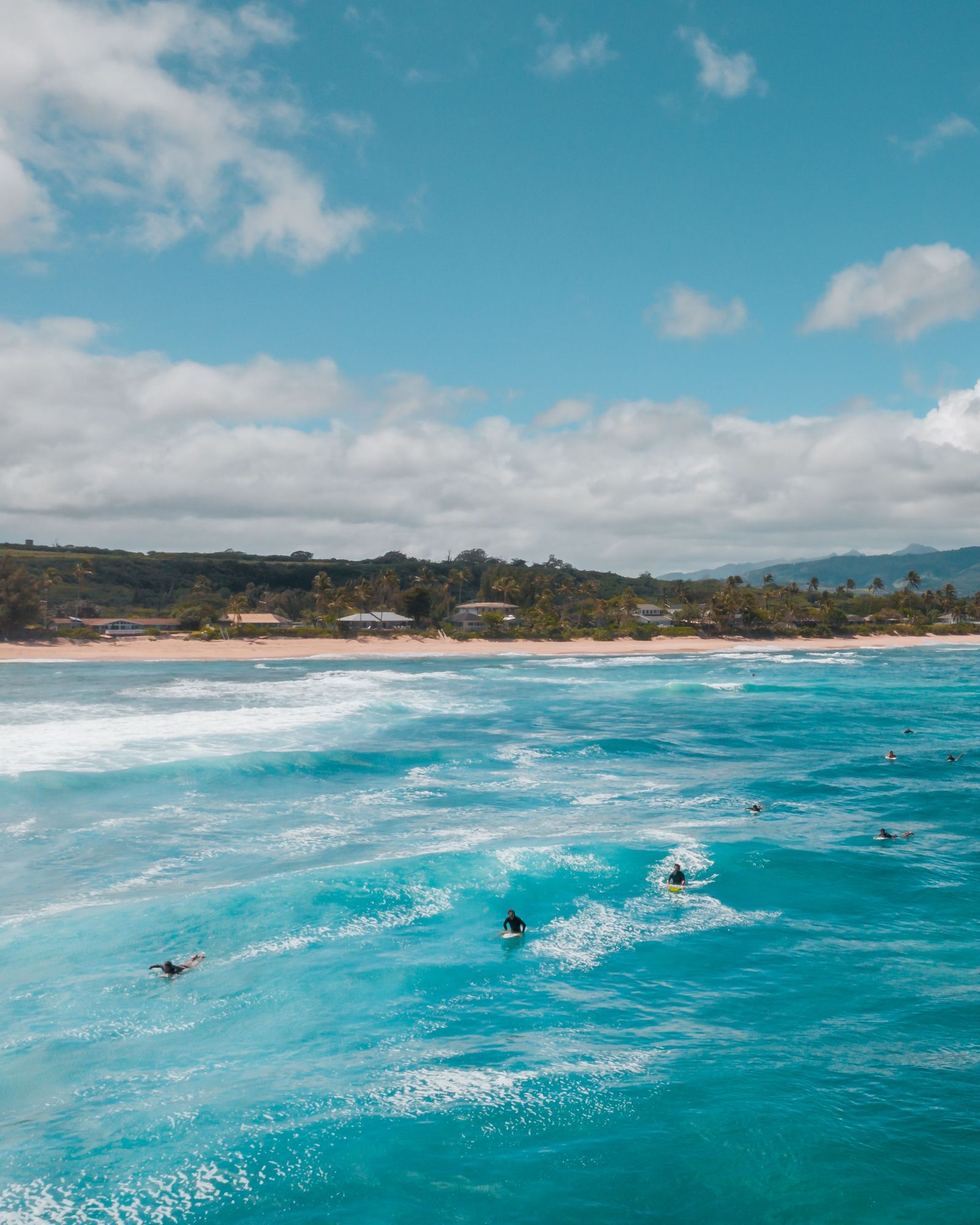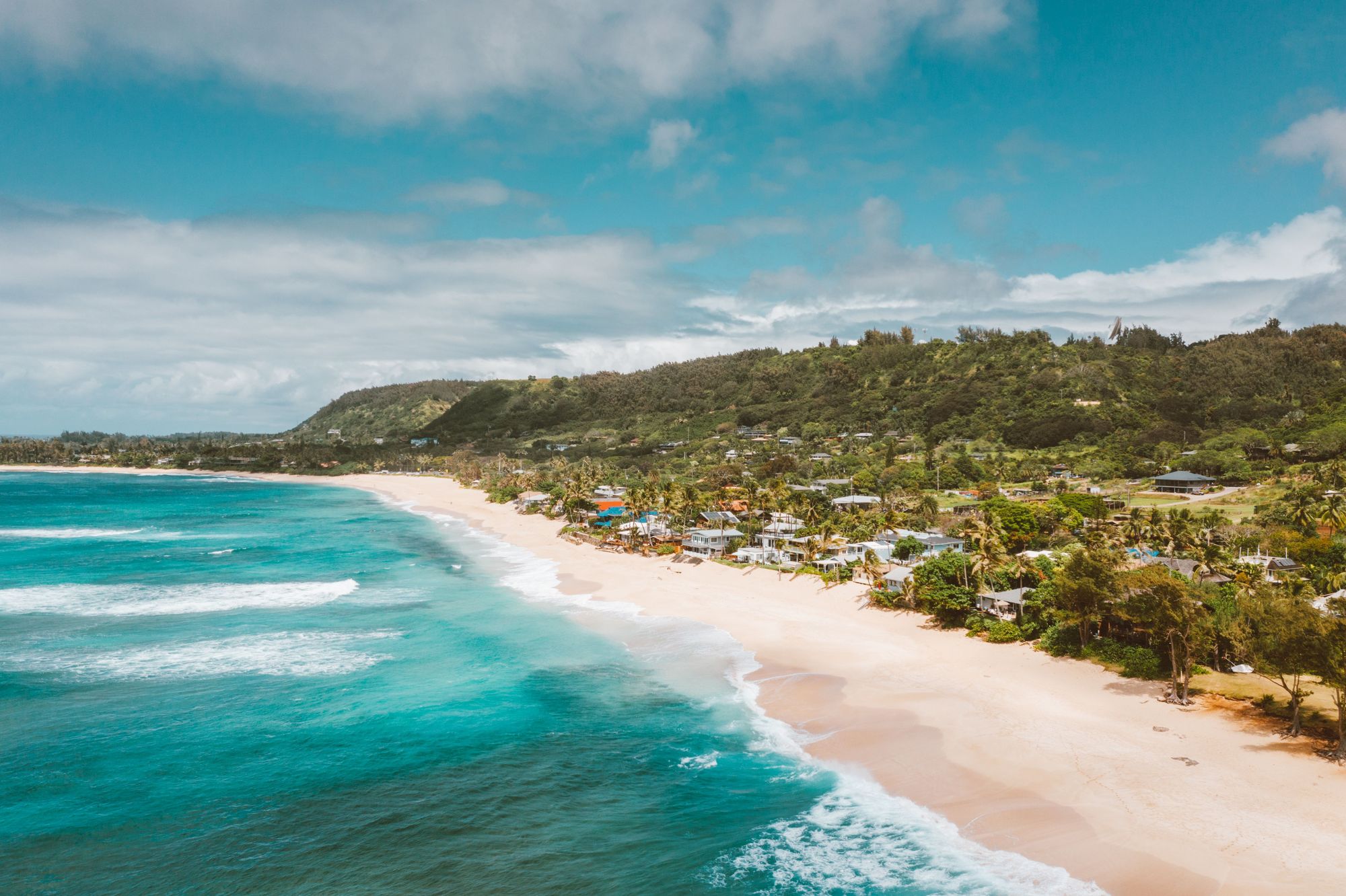
An hour from Waikiki, Oahu's North Shore feels like another island: small towns, food trucks, long golden beaches and, in winter, the most famous waves on the planet. In summer the same ocean turns calm and clear, and the coast becomes one of the best places on Oahu to swim, snorkel and watch sea turtles.
Haleʻiwa, the gateway town
Almost every North Shore trip starts in Haleʻiwa, a low-rise former plantation town on the Anahulu River. Wooden storefronts house surf shops, galleries, food trucks and the shave-ice stands that have made the town famous; Matsumoto Shave Ice has been serving it since the 1950s, and the queue is part of the experience.
Haleʻiwa Aliʻi Beach Park, at the harbour mouth, hosts surf contests in winter, while the river itself is a calm place to rent a kayak or a stand-up paddleboard. Come early in the day: by late morning the parking lots fill and traffic backs up along the highway.
The Seven Mile Miracle
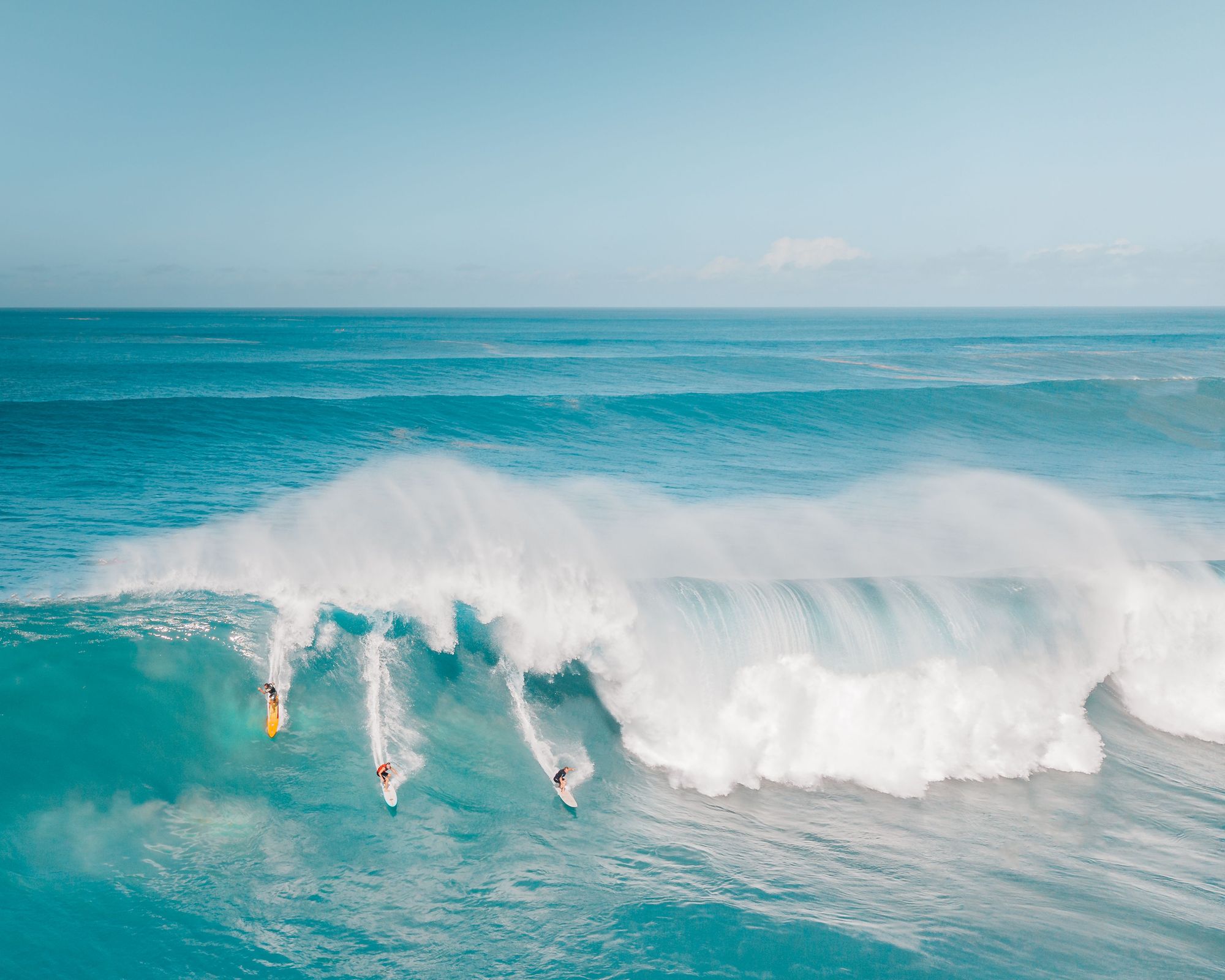
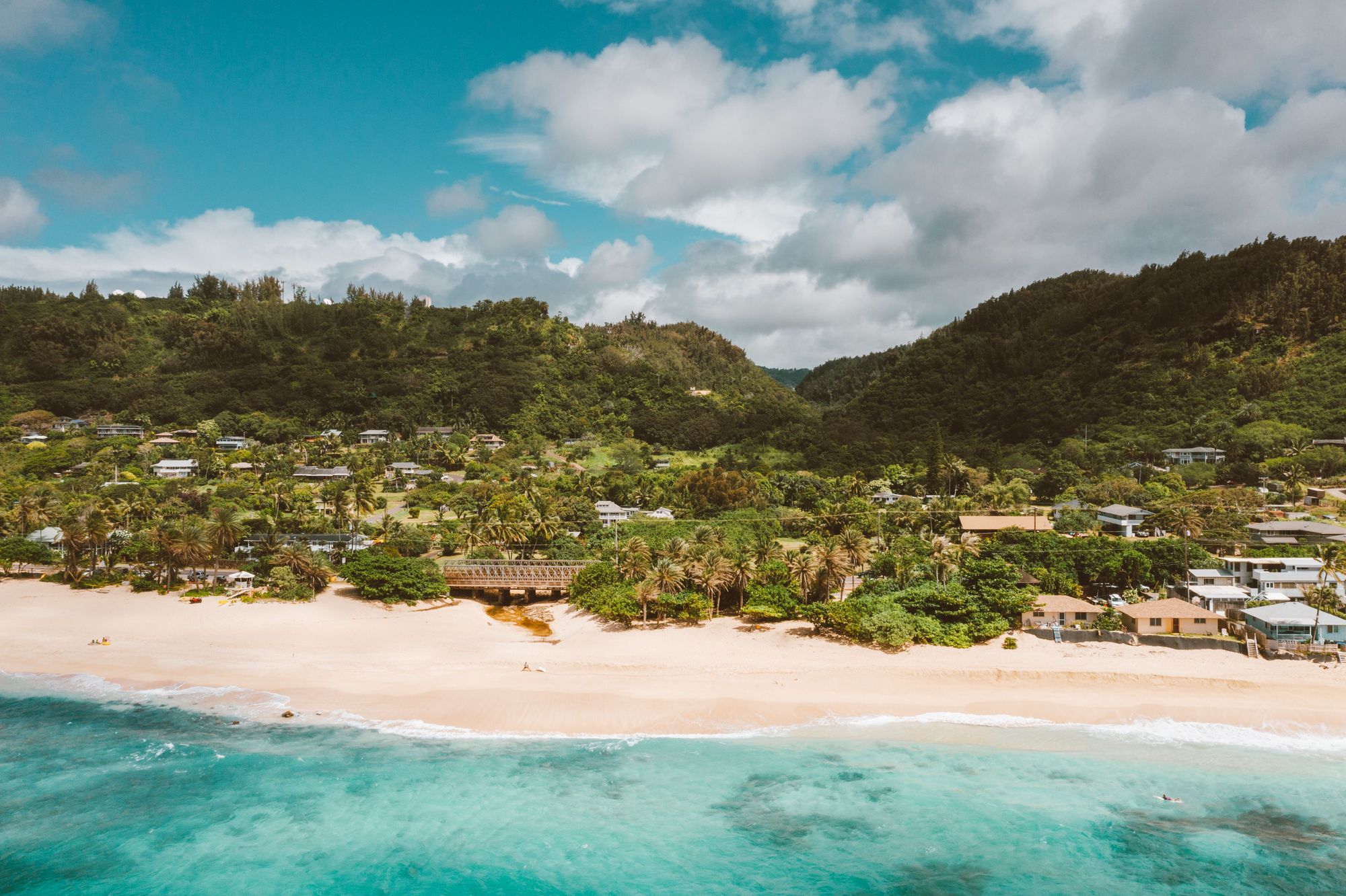
From Haleʻiwa to Sunset Beach the coast runs for roughly seven miles past one legendary surf break after another, which is why surfers call it the Seven Mile Miracle. From around November to March, swells generated by North Pacific storms arrive with almost nothing to slow them down, and the waves stand up on shallow reefs close to shore.
Waimea Bay is the home of big-wave surfing. When the open-ocean swell reaches at least 20 feet, producing wave faces of 30 to 40 feet in the bay, the Eddie Aikau Big Wave Invitational can be called, honouring the Waimea lifeguard and waterman Eddie Aikau. The conditions are so rare that the contest has run only a handful of times since 1985, most recently in 2023 and 2024.
A few minutes north, the Banzai Pipeline at ʻEhukai Beach Park breaks over a shallow lava reef into perfect, hollow tubes, and it is the most famous and most dangerous wave in the world. Sunset Beach, further on, is a long, powerful wave and, as the name promises, the best place on the coast to watch the sun go down. On big days, watch from the sand: these waves are for professionals.
Summer: when the ocean goes quiet
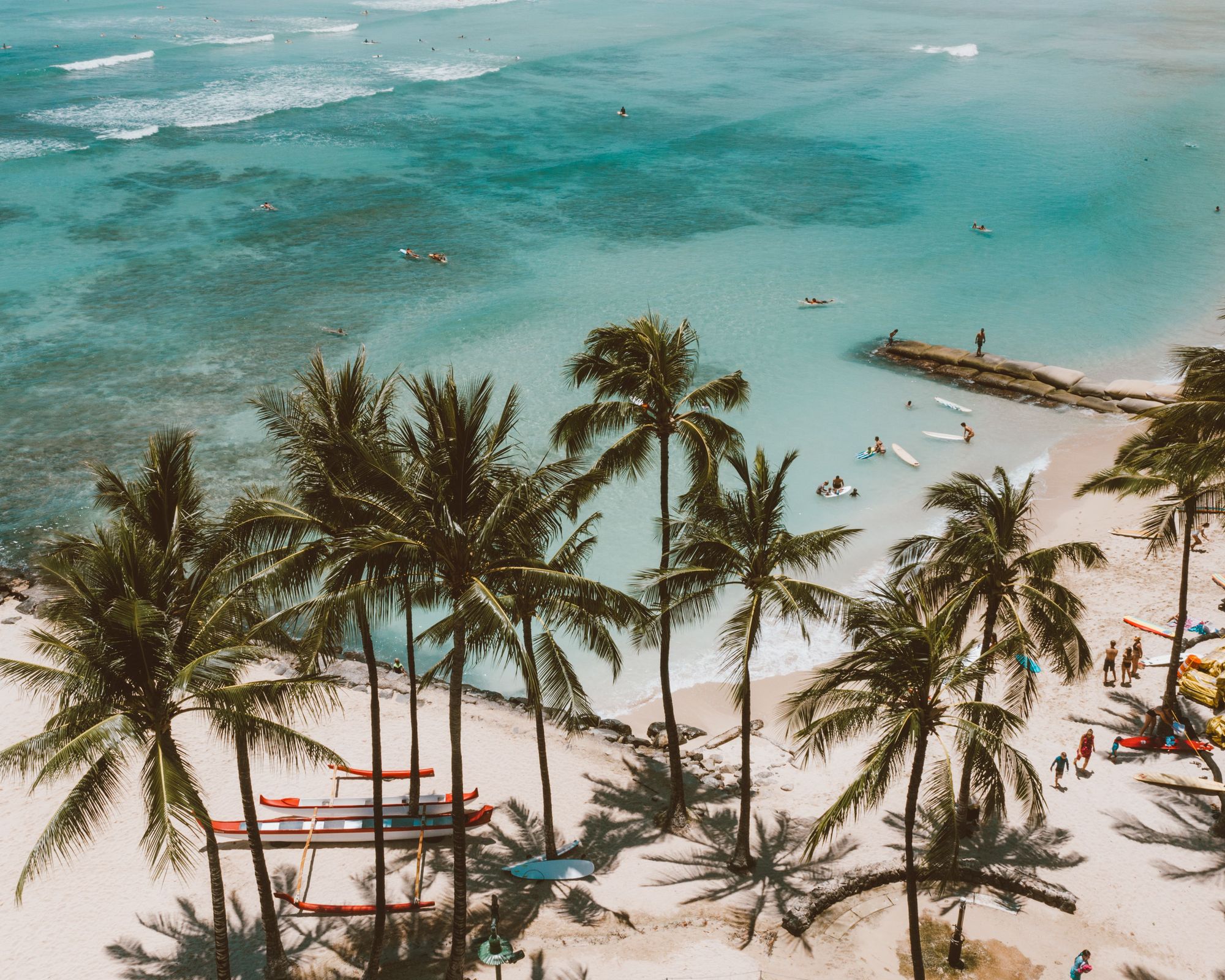
In summer, roughly from May to September, the North Shore changes completely. The swell usually fades, the water turns glassy and the same bays that thunder in winter become some of the best swimming and snorkelling spots on Oahu.
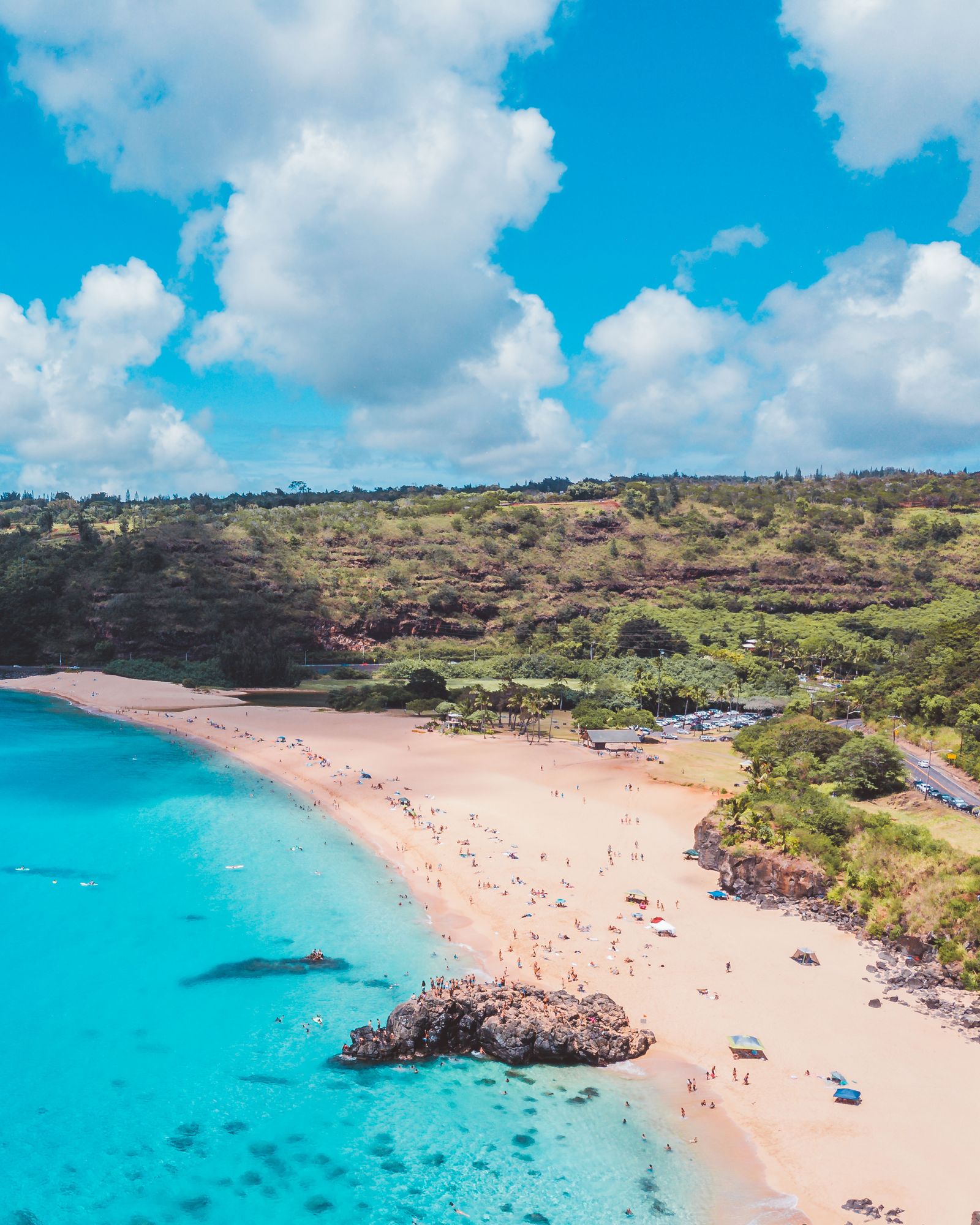
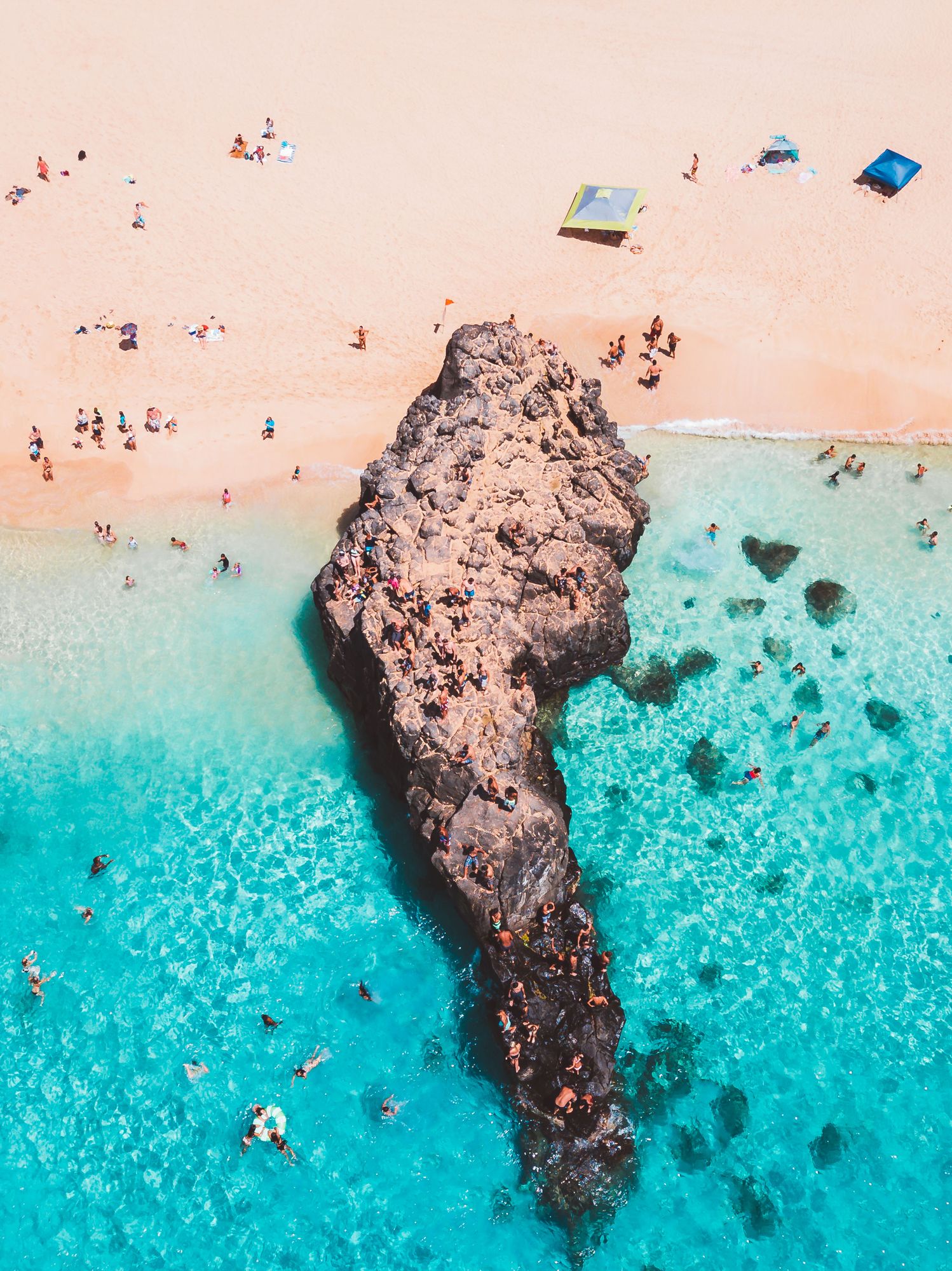
Shark's Cove and Three Tables, inside the Pūpūkea Marine Life Conservation District, are rocky coves full of reef fish, with tide pools to explore at low tide; despite the name, Shark's Cove is not known for sharks. Waimea Bay becomes a wide, calm swimming beach, and on flat days locals jump from the big rock at its southern end. Even in summer, ask the lifeguards about conditions before you go in.
The turtles of Laniakea
Between Haleʻiwa and Waimea, green sea turtles, honu, regularly haul out to rest on the sand at Laniakea Beach, often called Turtle Beach. Volunteers frequently rope off the resting turtles and share information about them.
Hawaiian green sea turtles are protected, and federal guidance is to stay at least 10 feet (3 metres) away on land and in the water, never touch or feed them, and never block their way back to the sea. Parking here is limited and the highway is busy: use legal parking only and cross the road with care.
Waimea Valley
Across the highway from Waimea Bay, Waimea Valley is a botanical garden and cultural site in a lush, green valley that was home to Hewahewa, the last high priest of the Hawaiian Kingdom. It is cared for by a Native Hawaiian non-profit, and an easy paved trail of about 1.2 kilometres (three-quarters of a mile) leads past restored living sites, a temple to the god Lono and ancient taro terraces to Waihī Falls, also called Waimea Falls.
When conditions allow, you can swim in the pool at the foot of the falls under the eye of a lifeguard, with a free life vest. The falls are weather-dependent and can run dry; check the opening days and conditions before you visit, as there is an entry fee.
Puʻu o Mahuka Heiau
On the ridge above Waimea Bay stand the stone terraces of Puʻu o Mahuka, the largest heiau, or temple, on Oahu. It is a state historic site and still a sacred place. The views along the coast are tremendous, but treat the site with respect: do not climb on the walls or move or leave stones.
Kaʻena Point
At the western end of the North Shore, past Mokulēʻia and the end of the road, a coastal trail leads to Kaʻena Point, the wild northwestern tip of Oahu. Part of the point is a natural area reserve protected by a predator-proof fence, where Laysan albatross nest on the dunes and Hawaiian monk seals sometimes rest on the rocks.
The walk is long, flat, hot and has no shade or water, so start early and carry plenty. Stay on the marked trail and keep well back from any wildlife you meet.
Kahuku and Turtle Bay
At the eastern end, the North Shore turns the corner towards Kahuku, a small town known for its aquaculture farms and the shrimp trucks that line the highway, serving garlic shrimp with rice. Nearby, Turtle Bay is the only large resort on the North Shore, with sheltered coves and walking trails along the coast.
Where to stay
The North Shore has very few hotels. Turtle Bay is the main resort; otherwise most visitors either stay in Honolulu or Waikiki and come for the day, or book a legal vacation rental. Short-term rentals are tightly regulated on Oahu, so make sure any rental you book is licensed.
Getting there and around
Haleʻiwa is about 55 kilometres (35 miles) from Waikiki, roughly an hour by car without traffic, and the drive through the island's central plain is part of the fun. A rental car is by far the easiest way to explore; TheBus runs from Honolulu but is slow. A shared path for walkers and cyclists runs along part of the coast between Waimea and Sunset Beach.
On big-surf days, traffic and parking can be very difficult. Arrive early, park only where it is legal, and never stop on the highway to look at the waves.
Staying safe in the ocean
The North Shore is beautiful and unforgiving. In winter, high surf brings powerful currents, sudden sets that wash across the sand and shore breaks strong enough to injure strong swimmers. Swim only at beaches with lifeguards, check the posted warning signs, never turn your back on the ocean, and stay off wet rocks and ledges. If in doubt, stay out: watching the waves is a spectacle in itself.